
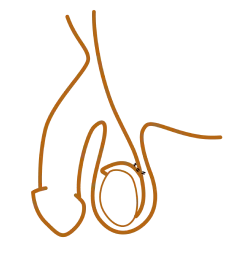
What is a vasoepididymostomy?
A vasoepididymostomy is more complex than a standard vasectomy reversal and is used in certain cases. It can also be used to clear a blockage in the tubules or abdomen. The operation is carried out under a microscope, and very fine stitches are used to join the vas deferens and epididymis.
It is a far more technical and demanding procedure, and should only be carried out by specially trained reproductive urologists with microsurgical expertise.
In this microsurgical procedure, the abdominal (upper) end of the vas deferens is connected to a tubule of the epididymis, rather than joining the two ends of the vas deferens together as in a vasovasostomy.
Preparation for a vasoepididymostomy
You will be examined before the procedure, and your doctor will review your medical history to decide whether the operation is right for you. You must be able to produce sperm for the procedure to go ahead. A testis biopsy is used to confirm sperm production and can also be used to collect sperm from the testicle.
Vasoepididymostomy procedure
During the operation, the epididymis is checked for blockages and a vasogram is carried out. A vasoepididymostomy takes three to five hours and is done under general anaesthetic.
Recovery from a vasoepididymostomy
You may be able to return to desk work as soon as three days after surgery. If your job is physically demanding, or you exercise regularly, for example running or working out, wait a month before returning to these activities.
You will have follow-up appointments after surgery so your doctor can check the incisions and how you are healing, and analyse a semen sample for sperm. Sperm is often present in the first sample six weeks after a successful vasoepididymostomy, although it can take up to 18 months for sperm to appear fully in the semen.
Related treatments and conditions
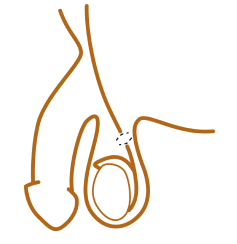
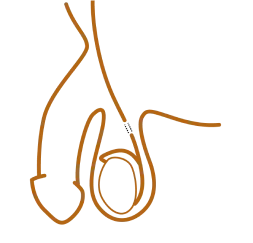
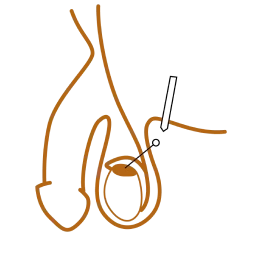
Research from our team
- Research paper 01Varicocele Treatment in Azoospermia Before Artificial Reproductive Techniques: Critical Considerations by the EAU Guidelines Panel on Sexual and Reproductive Health.Read article ↗
- Research paper 02Definition of a European pre-vasectomy scoring system to identify patients at risk of vasectomy regret.Read article ↗
- Research paper 03Oncological microdissection testicular sperm extraction (Onco-microTESE) outcomes for fertility preservation of patients with testicular cancer with azoospermia or severe oligoasthenoteratozoospermia.Read article ↗
- Research paper 04Does hormonal therapy improve sperm retrieval rates in men with non-obstructive azoospermia: a systematic review and meta-analysisRead article ↗
- Research paper 05Sperm recovery and ICSI outcomes in men with non-obstructive azoospermia: a systematic review and meta-analysisRead article ↗
- Research paper 06Non-obstructive azoospermia: current and future perspectivesRead article ↗