
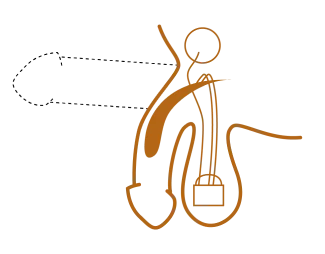
What is a penile prosthesis?
There are two main types of penile implant. Inflatable implants are made up of cylinders, a reservoir and a pump. Malleable implants are bendable rods rather than cylinders and do not need to be pumped up.
Sadly, even the most promising treatments for erectile dysfunction do not give some men the results they need, and some men are not suitable for conventional treatments. In these cases, a penile prosthesis (implant) is an effective way to achieve and maintain an erection.
Penile implants are devices placed in the penis and scrotum to help achieve and maintain an erection. As there are several types, we can help you choose the right one for you and your needs.
Is a penile prosthesis right for you?
Erectile dysfunction can be treated with medication, but sometimes tablets or injections do not work and an implant is the only option left. An implant can also help men with Peyronie’s disease who have erection problems as well.
If you are interested in an implant, you will talk to your doctor about whether you are a good candidate. Implants do not increase sexual desire or penis size. Your doctor will review your medical history, examine you and go through your options and the different types of implant.
Penile prosthesis procedure
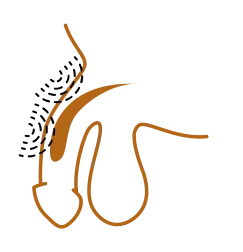
You will be given antibiotics through a drip to help prevent infection, and either a general or spinal anaesthetic. The area is shaved and cleaned before surgery.
To fit an inflatable implant, the surgeon makes a small incision in the scrotum and places a fluid reservoir inside. In men who have had previous surgery, the reservoir can be placed through an incision in the abdomen. Malleable implants are inserted in the same way, but without a reservoir or pump.
Recovery from a penile prosthesis
You may be prescribed pain relief after the procedure, although some men manage with over-the-counter painkillers. Pain after surgery can last a week or more.
You may not be able to return to physical activity for four to six weeks, so talk to your doctor about healing and pain relief.
The scrotum can be bruised and sore for several weeks. The risk of infection is low, but you should watch for any signs of it.
Related treatments and conditions


Research from our team
- Research paper 01Evaluating the appropriateness of penile prosthesis in non-organic erectile dysfunction and premature ejaculation: a Delphi consensus among penile implant surgeons.Read article ↗
- Research paper 02Penile prosthesis implantation: a systematic review of intraoperative and postoperative complications.Read article ↗
- Research paper 03Long-term penile prosthesis couple's satisfaction: A systematic review and meta-analysisRead article ↗
- Research paper 04Publisher Correction: Penile implants in low flow priapismRead article ↗
- Research paper 05Penile implants in low flow priapismRead article ↗
- Research paper 06Penile implant surgery-managing complicationsRead article ↗