
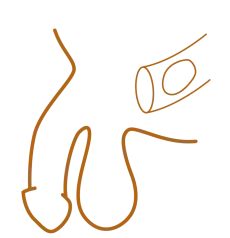
What are undescended testes?
The condition happens when a testicle does not move into its normal position in the scrotum. Usually only one testicle is affected rather than both.
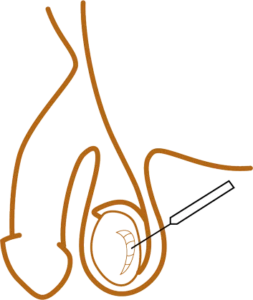
Undescended testicles are a common condition in which one or both testes, the male reproductive glands, do not fully descend from the abdomen into the scrotum before birth. Often the testicle moves down on its own without medical help, but if it has not moved into place after a few months, treatment may be needed.
The testicle produces hormones and sperm. If it is not in the right place, it may not grow, develop or work properly. An undescended testicle may also be linked to a higher risk of testicular cancer if it is not corrected before puberty.
Diagnosis of undescended testes
Most boys with an undescended testis are diagnosed as babies, as an examination shortly after birth gives doctors and midwives the information they need. The older a boy gets, the less likely the testicle is to move into the scrotum by itself. It should be in place by the age of one, and if it is not, surgery may be needed.
Symptoms of undescended testes
The main sign of an undescended testis is that a testicle cannot be felt in the scrotum. If nothing can be felt, the testicle may not have moved into the right position.
Most cases are found in childhood, and many correct themselves within a few months. Adult men found to have an undescended testis may develop fertility problems or testicular cancer later in life.
Treatment for undescended testes
Treatment varies, depending on the condition and whether there is a problem with either testicle.
Men with an undescended testicle may be more likely to have fertility problems and to develop testicular cancer later in life, so treating it early can help prevent problems in future.
An undescended testicle is usually corrected with surgery, where the surgeon moves the testis into place and secures it to the wall of the scrotum. This can be done with laparoscopic (keyhole) or open surgery, and a microdissection sperm retrieval may be carried out at the same time to collect sperm.
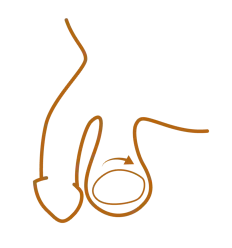
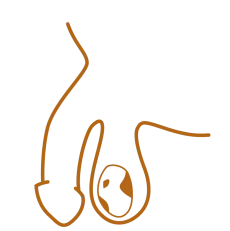
Related treatments and conditions
Research from our team
- Research paper 01Ultrasound localisation microscopy tracks testicular microvascular adaptations to endocrine function in male infertilityRead article ↗
- Research paper 02Contrast-enhanced ultrasonography vs MRI for indeterminate testicular lesions: a systematic review and meta-analysis.Read article ↗
- Research paper 03Oncological microdissection testicular sperm extraction (Onco-microTESE) outcomes for fertility preservation of patients with testicular cancer with azoospermia or severe oligoasthenoteratozoospermia.Read article ↗
- Research paper 04Does Testicular Sperm Improve Intracytoplasmic Sperm Injection Outcomes for Nonazoospermic Infertile Men with Elevated Sperm DNA Fragmentation? A Systematic Review and Meta-analysisRead article ↗
- Research paper 05Radiological features characterising indeterminate testes masses: a systematic review and meta-analysisRead article ↗
- Research paper 06Kisspeptin and Testicular Function-Is it Necessary?Read article ↗