
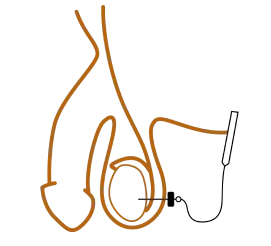
What is TESA?
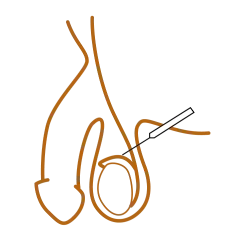
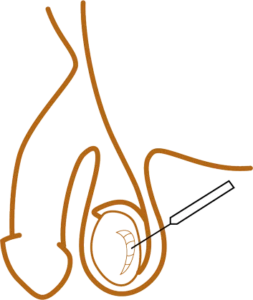
TESA is similar to PESA, another form of surgical sperm retrieval. Rather than taking sperm directly from the epididymis (the ‘sperm reservoir’ at the back of each testis), TESA draws out some of the sperm-producing tubules from the testes, and sperm is then extracted from them. This is different from fine needle mapping, which is a diagnostic test to look for isolated areas of sperm production.
Assisted reproduction techniques help couples achieve their greatest hope: a baby of their own. TESA is one of the techniques men often turn to, as it allows sperm to be obtained for fertilisation.
Men with fertility problems who want children of their own often choose this minimally invasive technique.
Overview of TESA
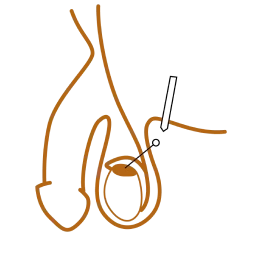
If the mapping test is positive, a second operation, microdissection testicular sperm extraction, is needed to obtain sperm for use, which means two procedures rather than one. These procedures are usually used when couples cannot conceive because of azoospermia, where semen tests have found a sperm count of zero. You can read more about azoospermia and the causes of male infertility on our male infertility page.
Surgical sperm retrieval can also help couples hoping for a baby after a vasectomy, when a vasectomy reversal is not suitable or not wanted.
TESA is one of the treatments Professor Minhas performs for men with obstructive azoospermia. Here the testes produce sperm, but a blockage in the tubes that carry it out of the testes stops it reaching the ejaculate. In some cases PESA or MESA may not be suitable. Blockages can have several causes, including being present from birth (congenital) and injury to the area. Vasectomy is one of the most common acquired causes, as it deliberately blocks the sperm-carrying tubes.
Risks of TESA
All surgery carries some risk, including infection and bleeding. These risks are generally small, and the highest standard of care and aftercare is always our priority, but it is important to understand them fully before going ahead, so we will discuss them with you beforehand.
There is no guarantee that TESA will lead to a pregnancy, but if the treatment is right for you, results are generally good.
Alternatives to TESA
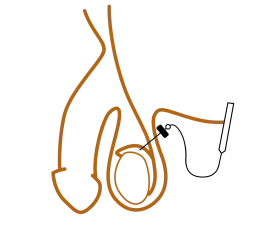
There are several surgical sperm retrieval techniques, which you can read about on our sperm retrieval page. The most suitable technique depends largely on your circumstances and the reason treatment is needed.
If you are having difficulty conceiving, Professor Minhas can investigate and diagnose the underlying cause and talk you through your treatment options. Get in touch to book a consultation.
Related treatments and conditions
Research from our team
- Research paper 01Varicocele Treatment in Azoospermia Before Artificial Reproductive Techniques: Critical Considerations by the EAU Guidelines Panel on Sexual and Reproductive Health.Read article ↗
- Research paper 02Oncological microdissection testicular sperm extraction (Onco-microTESE) outcomes for fertility preservation of patients with testicular cancer with azoospermia or severe oligoasthenoteratozoospermia.Read article ↗
- Research paper 03Does Testicular Sperm Improve Intracytoplasmic Sperm Injection Outcomes for Nonazoospermic Infertile Men with Elevated Sperm DNA Fragmentation? A Systematic Review and Meta-analysisRead article ↗
- Research paper 04Does hormonal therapy improve sperm retrieval rates in men with non-obstructive azoospermia: a systematic review and meta-analysisRead article ↗
- Research paper 05Sperm recovery and ICSI outcomes in men with non-obstructive azoospermia: a systematic review and meta-analysisRead article ↗
- Research paper 06Non-obstructive azoospermia: current and future perspectivesRead article ↗